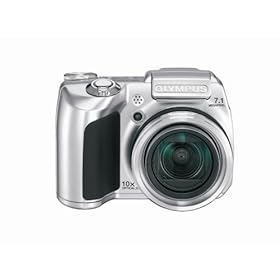

7.1-megapixel CCD captures enough detail for photo-quality 15 x 20-inch prints and takes video with the turn of a knob.
10x optical zoom with digital image stabilization; 2.5-inch LCD display, plus electronic viewfinder
Bright Capture for low-light photography and image viewing
In-camera editing features such as Red-Eye Fix
Stores images on xD Picture Cards; powered by 4 AA-size batteries.
This review is from: Olympus SP-510 Ultra Zoom 7.1MP Digital Camera with Digital Image Stabilized 10x Optical ZoomIt is important to thoroughly read the manual for any camera and test it out fully before making a decision on keeping it. For example, the "it picks some random focus point" issue can be solved by choosing P mode and telling the camera that the focus point should always be in the center. A lot of this camera's hidden beauty lies in its ability to be fully manually operated, from zoom (albeit awkwardly with buttons) to exposure. Unfortunately, this camera falls slightly short of being a great camera due to excessive noise and no optical image stabilization.Let's hit the bad points first and then balance them out with the good ones. The Olympus has no manual zoom control or manual ring focus control. This hurts because the motorized zoom is a lot slower than a manual can be and it is very noisy. Next, CCD imaging chips have a lot of pixels on them. Each pixel is sensitive to one color, so you'll have some of the pixels dedicated to blue, some to red and some to green. If a red pixel is placed on the sensor, only red will be sensed at that location. This is OK, because the camera's processor is able to guess the value of the missing colors and output it to the file. The ability of a camera to accurately guess colors (unless it's a 3 CCD camera with one imaging chip for each color) is what makes its photos look good or bad. Additionally, pixels are a certain size. As manufacturers put more pixels on the same-sized chip, these pixels must necessarily be smaller and are therefore more subject to electrically interfering with each other when the chip is exposed to light. This interference is called "noise" and is usually heavily processed out so that it doesn't mess up the photo's resolution. ISO ratings are an old film standard that defined the size of the individual film grains (100 being larger grains than 200, 400 or 800), with larger grains being able to capture more light and smaller grains being quicker at exposure, but shorter on detail. Digital cameras use this same terminology for their light sensitivity settings, with 100 being a bright daylight setting and 3200 being almost pitch dark. This camera is good to about ISO 200, after which, unacceptable amounts of noise creep in, preventing the use of the full 7.1 MP resolution print sizes. It'll make good 4x6s or 8x10s to ISO 800 and, after that, the camera will limit its own resolution to 3MP around 1600 and 3200. I would say that if you were shooting a lot of low light scenes without the flash, you'd be better off getting a DSLR and high quality lenses. This problem with ISO ties into the picture stabilization. The camera will adjust the shutter speed and flash and bump up the ISO to counteract camera shake, but, if you're using the stabilization and the light's not bright sunlight, you'll get a higher ISO and therefore more noise in the photo. This concept makes the higher end of the zoom unusable without a tripod or at least a monopod. The last real downside that is glaring is Olympus's refusal to allow CD cards in their cameras. They want you to buy their special media which is only available up to 2GB and has a higher per-byte cost than any other card. An SD or even a CF slot would have been welcome here! By the way, the flash is not automatic. It's got a little pop up button and you have to manually push it to get the flash up. Not a big deal, but might put people off. Another Olympus blunder is the LCD screen. It's big, but only slightly more than 100,000 pixels...meaning that it will NOT show the photos you take in their full quality. The electronic viewfinder is equally bad. You'll take a bunch of blah photos that will look great once you get them off of the camera...Olympus isn't the only guilty party-other big name manufacturers use a similar trick so they can advertise a 'HUGE SCREEN" and save money on the build cost. Check for this before you buy!Now for the good things. I know the ISO noise thing sounds like a killer, but the noise level is pretty much on par with other cameras in this class. Most long zoom cameras are basically point and shoots that try to squeeze too much out of their lenses and imaging chips and ISO ratings suffer for it. As long as you learn how to use the camera and learn how to take photos (for which this FULL MANUAL capable camera is ably suited), you'll be able to adjust. The lens is good and doesn't soften too much or distort more than any other camera in its class. T...

Detail Products
Detail Reviews
Click here for more information

»»»Visit Store NOW...
Best price click here
